Digital Banners That Actually Work for Small Business Clients

Let’s start with the most common mistake. Small business owners see digital banners everywhere and think, “I need those.” What they don’t see is the infrastructure required to make them actually work. They don’t know about programmatic bidding, audience targeting, creative optimization, or budget pacing. They just know their competitor has ads on their favorite news site and they want the same thing.
This is where most agencies either overcommit or underdeliver. You either spend way too much time manually placing banners on individual sites, or you use some basic ad network that shows their business on sketchy websites nobody’s ever heard of. Neither approach is sustainable.
The real opportunity with digital banners lies in programmatic display advertising done right. Not the spray-and-pray approach where you’re buying cheap inventory wherever you can get it. We’re talking about strategic placement on premium websites, intelligent targeting that actually reaches the right audience, and automation that makes it all manageable at scale.
Why Digital Banners Still Matter in 2026
Here’s something people don’t talk about enough. While everyone’s obsessing over the latest social media platform or whatever new advertising channel just launched, digital banners continue to quietly deliver results for businesses that do them right.
Think about how people actually browse the web. They’re reading news articles. They’re checking weather forecasts. They’re researching products on review sites. During all of this, they’re seeing digital banners. And when those banners are relevant, well-designed, and appear on trusted sites, people actually pay attention.
The key word there is “trusted.” This is where most cheap display advertising falls apart. Your client’s banner showing up on some content farm or questionable website doesn’t just fail to generate results. It actively damages their brand perception. People judge businesses by the company they keep, and that includes the websites where their ads appear.
This is why platforms like iPromote focus obsessively on premium placements. They maintain whitelists of high-quality websites where brands actually want to appear. News sites, lifestyle publications, industry-specific resources. Places where real people spend real time consuming content they actually care about.
The Creative Problem Nobody Wants to Talk About
You want to know what stops most agencies from offering display advertising to their small business clients? It’s not the technology. It’s not even the targeting. It’s the creative work.
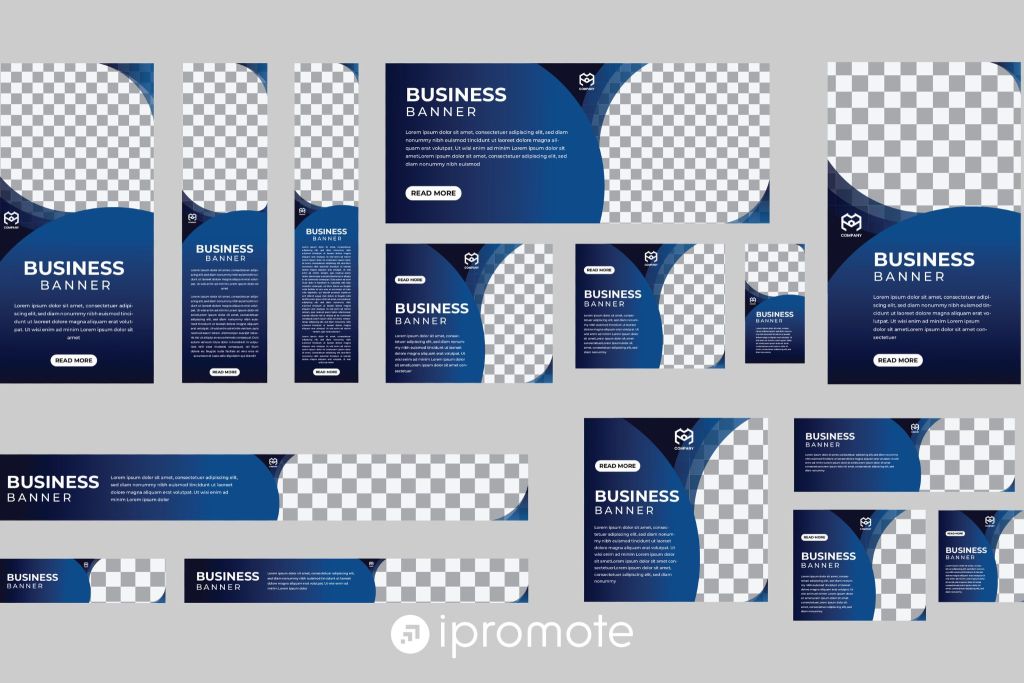
Creating effective digital banners means producing multiple sizes. You need everything from small rectangles to large leaderboards, mobile formats to desktop placements. Then you need variations for testing. Different headlines, different images, different calls to action. Before you know it, one campaign requires dozens of individual creative assets.
For an agency working with enterprise clients who have design teams and asset libraries, this is manageable. For small businesses? It’s a nightmare. Most of them don’t have professional photography. They don’t have a style guide. They might not even have decent logo files.
The traditional approach to this problem is to either charge them thousands for design work or lower your standards and produce mediocre banners that don’t perform. Neither option is great. What you really need is automation that can generate professional-looking digital banners in minutes, not days.
Game Changer: Modern platforms can now create a full suite of properly sized, professionally designed digital banners in under a minute. This isn’t about templates that all look the same. It’s about intelligent design systems that adapt to each business while maintaining quality.
How Programmatic Actually Works for Small Budgets
There’s this myth that programmatic advertising only works for big brands with massive budgets. That smaller businesses need to stick with simpler, less sophisticated approaches. This is completely backwards.
Small businesses actually need programmatic advertising more than large ones. Why? Because they can’t afford to waste money on irrelevant impressions. They need every dollar working as hard as possible, reaching exactly the right people at exactly the right time.
Here’s how it actually works when done right. Instead of buying specific placements on specific websites, programmatic platforms bid on individual ad impressions in real-time. The technology evaluates each impression based on dozens of factors. Is this person in the right geographic area? Do their browsing patterns suggest interest in this type of product or service? Are they on a premium website? Is this a viewable placement?
All of this happens in milliseconds. The platform decides whether to bid on that impression and, if so, how much. This means your client’s limited budget goes toward the impressions most likely to actually generate results, not just the cheapest inventory available.
But here’s the part that really matters for small businesses. Good programmatic platforms, like what iPromote offers, are specifically engineered to handle smaller budgets efficiently. They can do tight geographic targeting without compromising performance. They pace budgets intelligently throughout the month instead of burning through everything in the first few days.
The Targeting That Makes or Breaks Campaigns
Let’s get specific about targeting because this is where digital banners either work brilliantly or fail completely.
Basic targeting looks at demographics. Age, gender, maybe income level. It’s better than nothing, but it’s not particularly effective. Advanced targeting considers behavior, intent, and context.
Someone who’s been researching home renovation is probably more valuable to a contractor than someone who just happens to be in the right age bracket and geographic area. Someone reading articles about financial planning might be ready to talk to an advisor. Someone browsing recipes could be perfect for a local restaurant or meal delivery service.
The technology exists to make these connections. The question is whether your platform is sophisticated enough to use it properly. Can it track user journeys across devices? Can it identify people who saw an ad, later searched for related terms, and then visited your client’s website? Can it optimize based on these patterns?
This level of intelligence separates digital banners that generate actual business results from ones that just rack up cheap impressions.
What Actually Makes a Digital Banner Effective
Now let’s talk about the banners themselves. What makes one digital banner drive clicks and conversions while another gets completely ignored?
First, clarity wins over cleverness every single time. Your client might love a witty headline or artistic design, but people scrolling through a website need to understand the offer immediately. What is this? Who is it for? Why should I care? Answer these questions clearly and you’re already ahead of most banners out there.
Second, visual hierarchy matters more than you’d think. The eye should move naturally from the most important element (usually the headline or value proposition) to the supporting details to the call to action. When everything competes for attention equally, nothing gets attention at all.
Third, the call to action needs to be specific and compelling. “Learn More” is weak. “Get Your Free Quote” or “See Today’s Special” or “Book Your Consultation” tells people exactly what happens when they click.
Fourth, and this is crucial, the banner needs to match the landing page. If your digital banner promises a specific offer or service, the page people land on better deliver on that promise immediately. Nothing kills conversion rates faster than a disconnect between the ad and the destination.
Making Digital Banners Profitable for Your Agency
Let’s talk about the business side of this because that’s what actually matters. How do you offer digital banner advertising to small business clients in a way that makes sense for your agency’s bottom line?
The old model doesn’t work. Spending hours creating custom banners, manually negotiating placements, and babysitting campaigns means you need to charge premium prices. Small businesses can’t afford premium prices for display advertising. The math just doesn’t add up.
The new model flips this completely. When you can generate professional digital banners in under a minute, launch campaigns in minutes, and let automation handle optimization, your costs drop dramatically. You’re not selling hours of design and management time. You’re selling results enabled by technology.
This is where platforms like iPromote change the game for agencies. They report that partners can achieve up to 80% gross margins on customer budgets. That’s not by charging more, it’s by spending less time on manual work that technology can handle better anyway.
Think about what this means practically. You can profitably serve smaller clients who couldn’t justify the cost under the old model. You can manage more campaigns without proportionally expanding your team. You can test and optimize faster, which means better results, which means higher client retention.
The Math That Matters: If you can set up and launch a display campaign in minutes instead of hours, suddenly offering digital banners to a $1,000/month client makes perfect sense. Multiply that across dozens of small business clients and you’ve built a significant revenue stream.
Cross-Device and Cross-Channel Integration
Here’s something that often gets overlooked. People don’t experience marketing in channels. They experience it as a continuous flow across whatever devices and platforms they happen to be using.
Someone might see your client’s digital banner on their desktop while reading news in the morning. Later, they search for related services on their phone. That evening, they scroll past a social media ad on their tablet. These aren’t three separate people. It’s one person at different points in their journey.
The best digital banner strategies recognize this and work in harmony with your other marketing efforts. The messaging reinforces what they’re seeing in search ads. The branding matches what appears on social media. The overall effect is cohesive instead of fragmented.
When you’re working with a platform that handles multiple channels from one dashboard, like iPromote’s omnichannel approach, this coordination becomes automatic instead of requiring constant manual effort.
Measurement Beyond Vanity Metrics
Impressions don’t pay your client’s bills. Clicks are nice, but they’re not the same as customers. The real question with digital banners is always the same. Did this generate actual business results?
Good measurement tracks the full customer journey. Someone sees a digital banner but doesn’t click. Later, they search for your client’s business name and visit the website. Did that banner contribute to the conversion? Absolutely. But simple click-through tracking would miss it completely.
This is why conversion tracking matters so much. You need technology that can connect the dots across different touchpoints and show the real impact of your digital banners on business outcomes. Phone calls, form submissions, sales, appointments. Whatever actually matters to your client’s business.
When you can show a small business owner that their display advertising drove 15 qualified leads last month, and here’s exactly where those leads came from, you’re having a very different conversation than “we got 50,000 impressions.” One leads to budget increases and long-term partnerships. The other leads to questioning whether this is really worth the investment.
Getting Started Without the Usual Headaches
So how do you actually add digital banner advertising to your service offerings without it becoming a massive project that consumes all your time?
The key is starting with the right infrastructure. You need a platform that handles the technical complexity so you can focus on strategy and client relationships. Look for automation in creative production, campaign setup, budget management, and optimization. The more the technology handles automatically, the more clients you can serve profitably.
You need access to premium inventory that you’d never be able to negotiate on your own. Whitelisted sites where your clients’ brands will actually benefit from appearing. This isn’t something you can build yourself unless you have years and massive resources to invest in publisher relationships.
You need reporting that makes sense to small business owners. Not pages of metrics they don’t understand, but clear insights into what’s working and what it’s driving for their business.
And ideally, you need all of this white-labeled under your brand so clients see you as the expert and partner, not just a reseller of someone else’s technology.
Ready to Offer Digital Banners That Actually Work?
Discover how iPromote’s display advertising platform can help you deliver premium campaigns to small business clients while maintaining healthy margins.