Types of Display Advertising for Small Businesses
If your small business clients are trying to grow online, display advertising is one of the most powerful tools in the toolbox. But not all display ads are created equal — and knowing the difference can be the thing that separates a campaign that quietly drains a budget from one that actually moves the needle.
When marketing partners sit down with small business owners to talk about digital strategy, the conversation around display advertising can get complicated fast. There are a lot of formats, a lot of jargon, and a lot of platforms all claiming to be the best. The good news? Once you understand the core types of display advertising, the whole landscape becomes a lot easier to navigate — for you and your clients.
This guide breaks down the main types of display advertising you should know about, what makes each one useful, and how platforms like iPromote help partners bring these options to small businesses without the overhead of a massive in-house ad team.
Banner Ads — The Workhorse of the Web
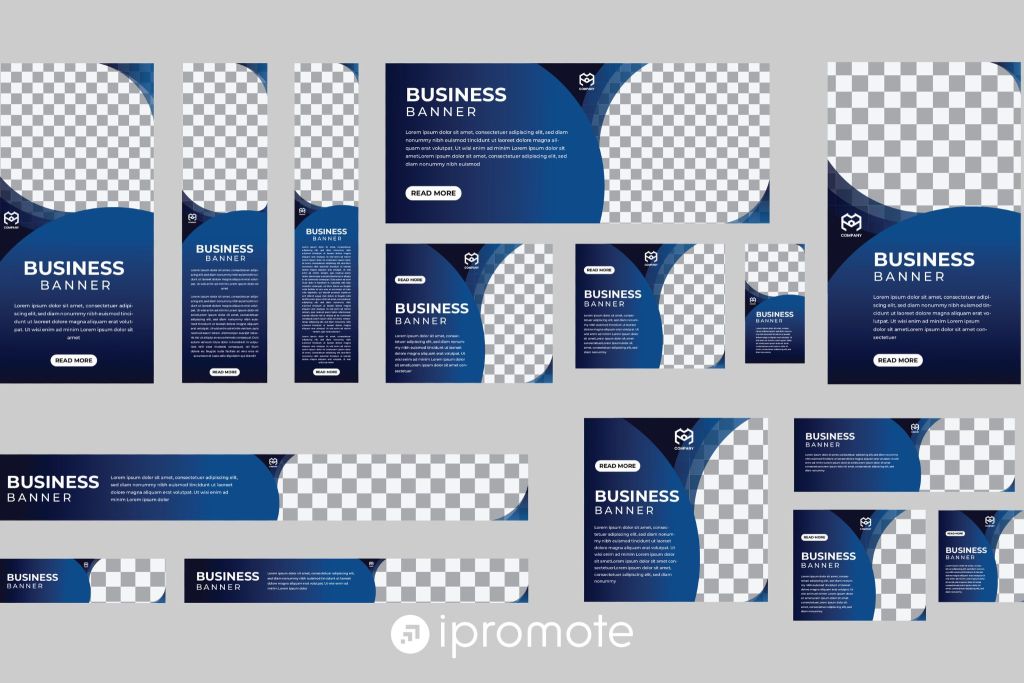
Banner ads are where most people’s minds go when they hear “display advertising,” and for good reason — they’ve been around since the early days of the internet and they still work. These are the static or animated image ads that appear across the top, sides, or bottom of a webpage.
For small businesses, banner ads are appealing because they’re relatively simple to produce and can be placed across thousands of websites through display networks. Standard sizes like the leaderboard (728×90), medium rectangle (300×250), and half-page (300×600) are universally recognized by ad platforms and publishers.
The key to making banner ads work is targeting. A beautifully designed banner shown to the wrong audience is wasted money. When partners use a platform like iPromote, that targeting layer is built in — small businesses aren’t left guessing who their ads are reaching.
Quick tip for partners: Banner ad creative needs to communicate the offer in under two seconds. Clean visuals, one clear message, and a strong call to action are non-negotiable. Small businesses often over-complicate their first banner — simpler usually wins.
Rich Media Ads — When You Want People to Stop Scrolling
Rich media ads take the banner concept and add interactive or dynamic elements. We’re talking expandable ads, hover effects, embedded video, countdown timers, and interactive product showcases. The goal is to create an experience that goes beyond a static image — one that actually invites the viewer to engage before they ever click.
These ads can feel out of reach for small businesses that don’t have a design department, but the barrier has come down significantly. With the right platform partner, rich media templates are available that make it feasible to run polished, interactive campaigns without a big production budget.
Rich media tends to drive higher engagement rates than standard banners, which matters when clients are asking for proof that their ad dollars are doing something. Higher dwell time and interaction rates are metrics you can actually show to a business owner over coffee.
Video Display Ads — Telling the Full Story
Video has become central to how people consume content online, and video display ads tap into that behavior. Unlike pre-roll ads that play before YouTube videos, video display ads appear within websites and apps — often autoplay with sound off, which means the first few seconds of visual storytelling carry enormous weight.
For small businesses in categories like restaurants, home services, fitness, and retail, video display ads let you show the product or experience rather than just describe it. A 15-second clip of a bakery’s fresh-from-the-oven moment or a before-and-after from a landscaping company can communicate more brand trust than any block of text.
Short-form video display ads (6–15 seconds) consistently outperform longer formats for brand awareness objectives. When small business clients are hesitant about video, shorter formats are a much easier entry point — and easier to produce, too.
Native Advertising — Ads That Don’t Feel Like Ads
Native advertising is the art of blending in. These ads are designed to match the look, feel, and format of the editorial content on the page they appear on. A sponsored article on a local news site, a promoted listing on a content platform, a recommendation widget at the bottom of a blog post — these are all forms of native display advertising.
The reason native works is simple: people have trained themselves to mentally skip over obvious ads. Native ads bypass that filter because they look like content. Engagement rates tend to be higher, and the overall experience feels less intrusive for the reader.
For small business clients in content-driven categories — think financial advisors, healthcare providers, real estate — native advertising lets them establish authority and build trust through information rather than interruption. It’s a different kind of conversation than a banner ad, and often a more effective one for certain audiences.
Retargeting Ads — Bringing People Back
Here’s a stat that still catches small business owners off guard: most people who visit a website for the first time do not convert. They browse, they get distracted, they leave. Retargeting display ads are the mechanism for re-engaging those visitors after they’ve left the site.
Retargeting works by placing a small piece of tracking code (a pixel) on a website. When someone visits and then leaves without taking action, that pixel allows the business to show them relevant ads as they browse other sites across the web. It’s why looking at a pair of shoes on one site means you might see those shoes on the next five sites you visit.
For small businesses, retargeting can be one of the highest-return tactics in the entire digital advertising toolkit — because you’re spending money on people who already showed interest, not cold audiences. When partners explain this to clients, it often reframes how they think about their ad budget altogether.
iPromote’s platform makes retargeting accessible for small business advertisers, without requiring the technical setup that used to be reserved for enterprise brands with dedicated ad ops teams.
Responsive Display Ads — Flexibility at Scale
Responsive display ads are designed to adapt. You provide a combination of headlines, descriptions, images, and logos, and the ad platform automatically generates ads that fit whatever ad slot is available — whether that’s a narrow sidebar, a wide banner, or a mobile screen.
For small businesses running campaigns across multiple placements and devices, responsive display ads solve a real production problem. Instead of creating dozens of size variations for every format, you create the building blocks and let the system assemble them. This is particularly useful when a small business is working with limited creative resources.
The tradeoff is some loss of precise creative control — not every combination will look exactly as you might have designed it. But for businesses prioritizing reach and efficiency over pixel-perfect brand consistency, responsive display ads hit a practical sweet spot.
Programmatic Display — Smart Buying at the Right Moment
Programmatic display advertising is less about the format of the ad and more about how it’s bought and placed. Instead of negotiating directly with publishers, programmatic uses automated technology to bid on ad placements in real time — matching ads to the most relevant audiences at the moment of availability.
The scale and precision that programmatic enables would have seemed like science fiction to marketers ten years ago. Ads can be targeted by location, time of day, browsing behavior, income range, device type, and dozens of other signals — all automatically, all in fractions of a second.
For partners working with small businesses, the conversation around programmatic used to be awkward because the buy minimums and technical complexity put it out of reach. Platforms like iPromote were built to change exactly that — bringing programmatic capabilities to local and small business advertisers through a partner model that makes the technology accessible without requiring clients to understand how it works under the hood.
Choosing the Right Type of Display Advertising for Your Clients
The honest answer is that there is no single best type of display advertising. The right choice depends on the business goals, budget, creative assets available, and where the customer is in the buying journey.
A new restaurant trying to build local awareness might start with geo-targeted banner ads and video display to drive foot traffic. An e-commerce business dealing with cart abandonment needs retargeting front and center. A professional services firm trying to establish credibility might lean toward native advertising. A business that needs reach and efficiency at low cost would likely benefit from responsive display ads running programmatically.
The types of display advertising available today represent real opportunities for small businesses to compete with larger players in their markets. The playing field has leveled considerably. What remains is connecting those businesses with partners who understand both the strategy and the tools.
Ready to Bring Display Advertising to Your Small Business Clients?
iPromote is an industry-leading advertising platform built for partners who want to offer enterprise-grade digital advertising to local and small business customers. From programmatic display to retargeting and beyond, iPromote gives partners everything they need to run effective campaigns and grow their book of business.
Visit ipromote.com to learn more about becoming a partner.
Author

Related post

Why Display Advertising Solutions Are the Growth Engine Small Businesses Have Been Missing

Why Native Advertising Platforms Are the Secret Weapon Small Businesses Have Been Waiting For