Why the Omnichannel Customer Journey Should Anchor Your Client Strategy
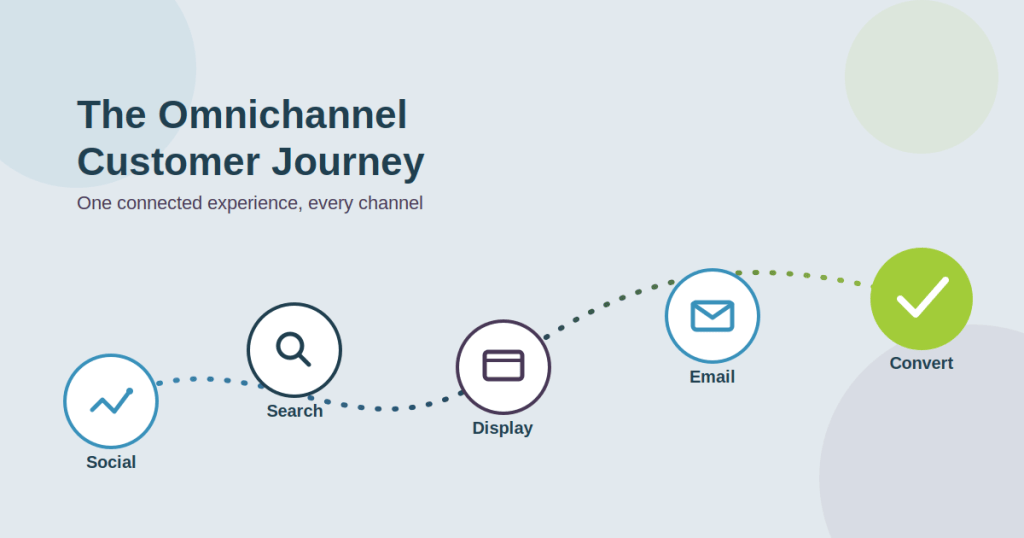
Your small business clients rarely have the bandwidth to think holistically about their marketing. They’re managing budgets, juggling vendors, and trying to keep up with whichever platform feels urgent that week. This is exactly where you come in. As a partner or agency, you have the chance to bring order to that chaos by building a true omnichannel customer journey for every client on your roster.
Digital consumers today move constantly between platforms and devices. A single person might scroll social media on their phone, browse a website on a laptop, and stream video content on a smart TV, all within the same evening. Every one of those moments is a potential touchpoint for your client’s brand. When those touchpoints work together instead of operating in isolation, the results speak for themselves. When they don’t, budgets get wasted and clients start asking hard questions.
What an Omnichannel Customer Journey Really Means for Your Clients
An omnichannel customer journey connects every digital interaction a potential buyer has with your client’s brand into one continuous, recognizable experience. Picture someone who first encounters a client’s product through a paid social ad. They click through to the website, browse a few pages, and leave without converting. A retargeting display ad reminds them later that day. An email arrives the next morning with a relevant offer. Eventually they return through a search ad and complete the purchase.
None of that feels random to the buyer. The messaging stays consistent, the timing feels natural, and the offer builds logically from one touchpoint to the next. Delivering that kind of continuity takes real coordination behind the scenes, and that coordination is exactly what separates agencies clients keep renewing from agencies clients quietly replace.
Compare this to a simple multichannel setup, which is still how many small business campaigns run today. Multichannel just means showing up across several platforms without connecting them. A search campaign runs independently from a display campaign. A social ad promotes one offer while an email promotes something entirely different. Buyers notice the disconnect even when they can’t quite name what feels wrong, and that friction quietly erodes trust in the brand you’re managing on their behalf.
Why This Matters So Much for Your Business
Small business owners increasingly expect their agency partners to think beyond single-channel execution. They’ve seen larger competitors run polished, connected campaigns, and they want that same level of sophistication applied to their own budgets, even if those budgets are far smaller.
Delivering a strong omnichannel customer journey gives you a real competitive edge as a partner. Clients who see their campaigns working together across channels tend to stay longer, spend more, and refer other businesses your way. Retention matters enormously for your agency’s bottom line, since replacing a lost client typically costs far more in time and resources than nurturing an existing relationship.
There’s also a scalability argument here. Managing disconnected campaigns across multiple platforms for dozens of clients quickly becomes unsustainable. You end up drowning in separate dashboards, conflicting reports, and manual reconciliation work. A unified approach to the omnichannel customer journey doesn’t just benefit your clients. It makes your own operations dramatically more efficient.
Common Mistakes That Undermine the Journey
Even experienced partners sometimes stumble when trying to deliver a connected experience for clients. A few patterns show up repeatedly.
Campaigns often get built in silos. One team member handles paid social while another manages display, and the two rarely compare notes. Without coordination, messaging drifts apart and opportunities to reinforce a single narrative get lost.
Inconsistent creative and tone can cause similar damage. If a display ad feels playful and casual but a follow-up email reads stiff and formal, buyers may wonder if they’re even looking at the same brand. Maintaining a consistent voice across every channel takes deliberate effort, especially when different specialists handle different pieces of the campaign.
Fragmented data creates another common breakdown. Without visibility into how a buyer moves across search, social, display, and email, you end up guessing rather than optimizing. You might keep serving a cart-abandonment ad to someone who already converted through a different channel, which wastes spend and annoys the buyer.
Some partners also try to activate too many channels too quickly for a client without a clear strategy tying them together. Spreading a limited budget across every available platform rarely produces the cohesive experience buyers actually respond to.
Building a Better Journey With the Right Platform
Delivering a genuine omnichannel customer journey for your clients doesn’t require reinventing your entire workflow, but it does require the right infrastructure behind you. This is exactly the gap iPromote was built to close for partners like you.
iPromote gives you the ability to plan, launch, and manage coordinated campaigns across display, video, mobile, and social channels from a single platform. Instead of juggling separate logins and stitching together reports from multiple vendors, you can build campaigns for your clients that speak with one consistent voice across every channel a buyer might encounter. That consistency is the foundation of a strong omnichannel customer journey, and it’s far easier to achieve when you aren’t managing five disconnected systems at once.
The platform also emphasizes data-driven targeting, which helps you put your clients’ budgets in front of the right audience rather than casting a wide net and hoping something lands. Sharper targeting means more relevant messaging, and relevant messaging keeps buyers engaged instead of tuning out. This precision matters even more when a client has a limited budget and every impression needs to earn its keep.
Reporting ties the whole picture together. Working within iPromote, you can track performance across the full journey rather than reviewing each channel as its own isolated report. That visibility lets you make smarter adjustments for your clients in real time. If a particular touchpoint underperforms, you can identify the issue and shift strategy before wasting additional budget.
Practical Steps for Delivering Stronger Journeys
If you’re looking to strengthen how you build omnichannel customer journeys for your clients, a few foundational steps can make an immediate difference.
Start by mapping each client’s existing digital touchpoints. Before adding anything new, get a clear picture of where buyers currently interact with the brand. This usually includes the website, paid social, display retargeting, email, and search. A clear map quickly reveals where gaps or overlaps exist.
Next, standardize messaging across every channel you manage for a given client. This doesn’t mean every asset needs to look identical, but the tone, core offer, and value proposition should feel unmistakably connected no matter where a buyer encounters them.
Consolidate your tools wherever possible. Managing campaigns through a single platform instead of several disconnected ones makes consistency dramatically easier to maintain, and it saves your team meaningful time on reporting and reconciliation. Partners already running campaigns through iPromote have a head start here, since the platform was designed specifically for this kind of coordinated management.
Test continuously and adjust based on real performance data. No omnichannel customer journey performs perfectly right out of the gate. Small, data-backed refinements tend to outperform sweeping changes made on instinct alone.
Finally, keep your client’s buyer at the center of every decision you make. It’s easy to get absorbed in platform features and lose sight of the actual experience a real person has moving through a campaign. Regularly stepping back to ask how that buyer perceives the journey keeps your strategy grounded and effective.
The Long-Term Payoff for Your Agency
Building a genuine omnichannel customer journey takes coordinated effort, but the payoff extends well beyond any single campaign. Clients who see their budgets working harder across connected channels tend to stay loyal, expand their spend, and recommend you to other business owners in their network.
For you as a partner, this creates a clear path to differentiation. Many small business owners simply don’t have the internal expertise to think about their marketing this holistically. When you can guide them through a connected strategy, backed by a capable platform, you position yourself as an essential part of their growth rather than just another line item in their budget.
iPromote was built to support exactly this kind of partnership. The platform combines the reach and sophistication your clients need with the flexibility you need to serve a diverse book of business across different industries and budget sizes. Whether you’re managing a single local client or a full portfolio of small business accounts, the underlying principles of a strong omnichannel customer journey stay the same. Consistency, sharp targeting, and unified data work together to turn scattered campaigns into one connected experience you can confidently stand behind.
To learn more about how iPromote helps partners like you deliver stronger, more connected advertising strategies for your small business clients, visit ipromote.com.