Why Online Advertising Platforms Matter More Than Ever for Small Businesses
Small business owners wear a dozen hats before lunch. They manage inventory, answer customer emails, handle payroll, and somehow still find time to think about marketing. Advertising often gets pushed to the bottom of the list, not because it doesn’t matter, but because it feels complicated and expensive. That’s where online advertising platforms come in.
These platforms have changed the way local businesses reach customers. A decade ago, advertising meant a newspaper insert or a radio spot with vague results and no real way to measure impact. Today, online advertising platforms let a business owner target the exact customer they want, track every dollar spent, and adjust course in real time. The barrier to entry has dropped, but the number of choices has grown just as fast, which can leave a business owner more confused than empowered.
What Online Advertising Platforms Actually Do
At their core, online advertising platforms connect businesses with the audiences most likely to buy from them. They do this across search engines, social media, streaming video, display networks, and more. Instead of guessing who might see an ad, businesses can define their audience by location, age, interests, browsing behavior, and even past purchases.
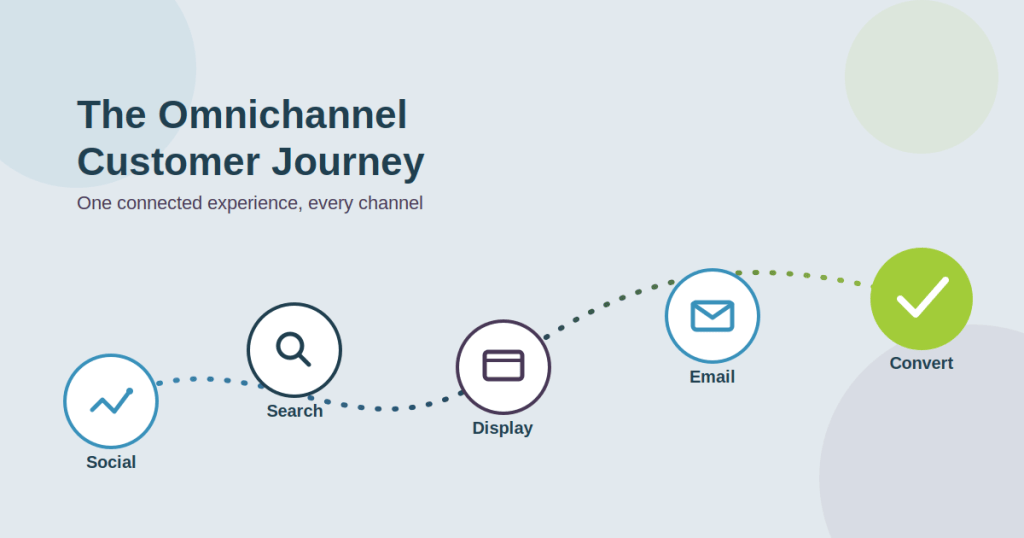
Google Ads puts a business in front of someone actively searching for a product or service. Meta and TikTok reach people scrolling through their feeds, often before they even know they need something. Programmatic display networks place banner ads across thousands of websites at once. Connected TV advertising delivers commercials to streaming audiences who no longer watch traditional cable. Each channel plays a different role, and a well-rounded campaign usually pulls from several of them at once.
The technology behind these platforms has become remarkably sophisticated. Machine learning models predict which ad creative will perform best for a given audience segment. Bidding algorithms adjust spend in fractions of a second based on the likelihood of a conversion. None of this requires the business owner to understand the math behind it, but it does mean results improve dramatically when the platform is set up correctly.
The Problem Most Small Businesses Run Into
Here’s the catch. Running a single campaign on one platform is manageable. Running coordinated campaigns across search, social, display, and video takes a very different level of expertise. Each channel has its own dashboard, its own bidding logic, and its own creative requirements. A business owner trying to manage all of it alone quickly runs out of hours in the day.
Hiring in-house specialists solves part of the problem, but it introduces a new one. Skilled advertising talent is expensive, and most small businesses don’t generate enough ad spend to justify a full team of certified experts across every channel. Even agencies and marketing service providers face this challenge when they try to serve dozens or hundreds of small business clients at once. Staffing costs climb faster than revenue, and margins on smaller accounts often disappear entirely.
Fragmentation compounds the issue. Managing five or six different platforms across many client accounts becomes an operational headache before a single campaign gets optimized. Reporting alone can eat up hours every week, especially when each channel produces data in a different format. Small budgets make this worse, because the fulfillment cost of running a campaign can eat up whatever profit was supposed to come from it.
Why Partnering With the Right Platform Changes the Equation
This is exactly the gap iPromote was built to close. Rather than asking agencies, media companies, and marketing service providers to build out an entire in-house advertising operation, iPromote gives partners access to a single omnichannel fulfillment platform. Partners bring the client relationships and the strategy, while iPromote handles execution across search, social, programmatic display, video, connected TV, and local media.
This model matters because it removes the three biggest obstacles that keep businesses from selling or benefiting from paid advertising. Staffing overhead shrinks because there’s no need to hire a certified specialist for every new channel. Platform fragmentation disappears because everything lives under one login and one dashboard. Margins hold steady because campaigns launch quickly and don’t require weeks of manual setup.
For the small business at the other end of the relationship, this translates into faster results. Campaigns built through iPromote typically launch within a few business days rather than weeks. Creative assets and landing pages get produced quickly, often in minutes rather than through a lengthy design process. Reporting stays unified, so a business owner can see exactly how their investment is performing without digging through five separate logins.
What to Look for in an Online Advertising Platform
Not every platform delivers the same value, so it helps to know what separates a strong option from a weak one. A few things stand out.
Channel coverage matters. A platform limited to search or social alone forces businesses to piece together their strategy from multiple vendors. Look for coverage across search, paid social, programmatic display, video, connected TV, and local targeting, since customers rarely convert from a single touchpoint anymore.
Speed to launch matters just as much. Small businesses often need to respond to seasonal demand, local events, or sudden opportunities. A platform that takes weeks to get a campaign live isn’t much help when the window for that opportunity is short.
Transparent pricing avoids nasty surprises. Flat rates and predictable fees let a business or agency know its margin before a deal even closes. Hidden costs erode trust and make it hard to plan for growth.
Unified reporting saves time and builds confidence. When performance data lives in one dashboard instead of scattered across a dozen platforms, it becomes far easier to make smart decisions about where to shift budget next.
Scalability keeps the platform useful long term. A solution that works for five clients should also work for five thousand. Growth shouldn’t require a complete infrastructure overhaul every time the client list expands.
iPromote checks each of these boxes, which explains why more than 50 partners around the world rely on the platform to fulfill campaigns for their small business customers. The platform wins tens of billions of ad auctions daily and produces fully customized ads in under five minutes, all while keeping average campaign launch times under three days.
Measuring What Actually Works
One of the biggest advantages online advertising platforms offer over traditional advertising is measurement. A print ad or a billboard can’t tell a business owner how many people walked through the door because of it. Digital campaigns can, and that changes how decisions get made.
Conversion tracking shows exactly which ad, keyword, or audience segment led to a phone call, a form submission, or a purchase. Attribution models help sort out which channel deserves credit when a customer interacts with several touchpoints before converting. Return on ad spend, often shortened to ROAS, becomes a number a business owner can actually watch and improve over time instead of a vague hope that advertising is “working.”
This level of visibility used to require a data analyst on staff. Now it comes built into most modern platforms, presented through dashboards that translate raw numbers into clear takeaways. A business owner doesn’t need to understand statistical modeling to know that shifting budget toward the campaign generating more calls at a lower cost makes sense.
The challenge is that measurement only helps if someone actually reviews it and acts on it. Data sitting unused in a dashboard doesn’t improve anything. This is another area where a fulfillment partner adds real value, since ongoing optimization means someone is actively watching performance and reallocating budget toward what’s working, rather than letting a campaign run on autopilot for months at a time.
Real Results Speak Louder Than Feature Lists
Features and specs only tell part of the story. What matters most is whether a platform actually delivers results for the businesses using it. Adrian Lefler, CEO of My Social Practice, put it simply when describing the experience of working with iPromote’s team: the platform has been easy to use and effective, and the support team consistently shows up when help is needed.
That kind of feedback reflects something important about online advertising platforms in general. Technology alone doesn’t guarantee success. The combination of smart automation and responsive human support tends to produce the best outcomes, especially for small businesses that don’t have the bandwidth to troubleshoot technical issues on their own.
Choosing a Path Forward
Small business owners don’t need to become advertising experts to compete effectively online. What they need is access to the right tools, or a partner who already has those tools in place. Online advertising platforms have leveled the playing field in many ways, giving local businesses the same targeting precision and measurement capabilities that were once reserved for national brands with massive budgets.
The businesses that win in this environment usually aren’t the ones spending the most money. They’re the ones spending it efficiently, reaching the right audience on the right channel at the right moment. Achieving that consistently requires either serious in-house expertise or a platform partner built to handle the complexity behind the scenes.
For agencies, media companies, and marketing service providers looking to offer this kind of value to their small business customers, iPromote provides a path to do exactly that. One platform. Every major channel. A pricing structure built for margin instead of against it. Partners stay focused on the client relationship and the strategy, while iPromote’s team and technology handle the execution.
Anyone curious about how this model works in practice can find more detail at ipromote.com, including case studies, platform demos, and information on becoming a partner. Online advertising doesn’t have to be overwhelming, and the right platform can make all the difference between a campaign that struggles and one that consistently delivers.