What Makes an Omnichannel Marketing Agency Worth Choosing

Small business owners rarely have time to manage five different advertising platforms while also running their actual business. That’s exactly why so many turn to an omnichannel marketing agency instead of trying to piece together their own strategy across scattered tools and vendors. But not every omnichannel agency delivers the same value, and understanding what separates a strong partner from a mediocre one can save a business real money and real headaches.
This guide breaks down what an omnichannel marketing agency actually does, why the approach matters for small businesses, and what qualities set the best agencies apart from the rest.
What Is an Omnichannel Marketing Agency
An omnichannel marketing agency manages advertising and marketing efforts across multiple channels at once, rather than focusing on just one platform or tactic. Search ads, display ads, social media campaigns, email marketing, and even offline advertising all fall under one coordinated strategy instead of operating as separate, disconnected efforts.
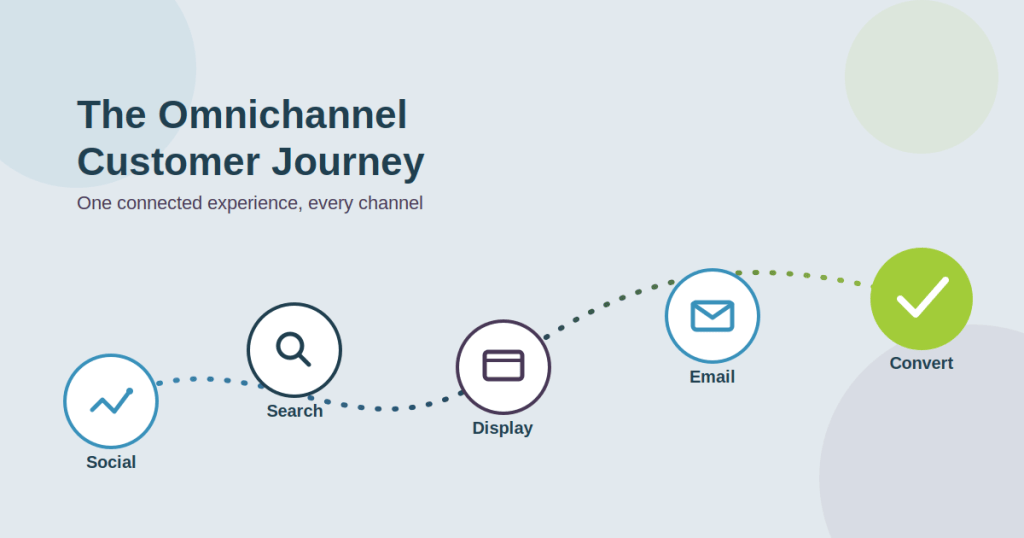
The word “omnichannel” gets used a lot in marketing conversations, sometimes loosely, so it helps to define it clearly. A true omnichannel approach connects every channel so they work together toward the same goal, rather than simply running the same campaign in multiple places without any coordination. A customer might see a display ad on Instagram, receive a follow up email a few days later, and then encounter a search ad when they finally decide to look up the business directly. Each touchpoint reinforces the others instead of existing in isolation.
This matters because customers rarely make a purchase decision after seeing just one ad. Most people need multiple exposures to a brand before they feel comfortable buying, and an omnichannel agency designs campaigns with that reality in mind.
Why Small Businesses Benefit From an Omnichannel Approach
Small businesses often assume that omnichannel marketing belongs to bigger companies with bigger budgets, but that assumption misses an important point. Coordinated marketing frequently produces better results per dollar spent, since each channel supports the others instead of competing for the same limited attention.
A single channel strategy leaves gaps. A business running only search ads misses the chance to build awareness among people who aren’t actively searching yet. A business running only social media ads misses the opportunity to capture people who are actively looking for a solution right now. Combining channels closes these gaps and captures customers at multiple points in their decision making process.
Consistency across channels also builds trust faster. When someone sees the same message, tone, and visual style whether they’re scrolling social media or reading a search ad, that repetition builds familiarity. Familiarity leads to trust, and trust leads to conversions. A scattered, inconsistent approach across channels rarely achieves that same effect.
Working with an omnichannel agency also saves small business owners significant time. Instead of managing separate vendors or platforms for search, social, email, and display advertising, a business gets one point of contact overseeing the entire strategy. That simplicity alone makes a real difference for owners already stretched thin.
Key Qualities of a Strong Omnichannel Agency
Not every agency claiming to offer omnichannel services actually delivers a truly coordinated strategy. A few key qualities separate agencies that genuinely integrate channels from those simply running the same campaign in multiple places without real coordination.
Clear communication between channels stands out as one of the most important qualities. A strong agency doesn’t just run five separate campaigns and call it omnichannel. Instead, the agency builds a strategy where insights from one channel inform decisions on another. If a display ad campaign reveals which visuals resonate most, that insight should shape creative decisions for social media ads too.
Transparent reporting matters just as much. Small business owners deserve to understand exactly how their budget gets spent and what results each channel produces. An agency that provides clear, consolidated reporting across all channels makes it much easier for a business owner to see the full picture rather than piecing together separate reports from different platforms.
Flexibility also separates strong agencies from mediocre ones. Consumer behavior shifts, seasons change, and what worked last quarter might need adjustment this quarter. A strong omnichannel agency continuously monitors performance and shifts budget toward whatever channels are producing the best results, rather than locking a client into a rigid plan that never evolves.
Industry experience across multiple verticals helps too. An agency that has worked with restaurants, retail shops, service businesses, and other industries brings a broader perspective to strategy decisions. That experience often translates into faster problem solving and smarter recommendations, since the agency has likely encountered similar challenges before.
Common Channels an Omnichannel Agency Manages
Understanding the specific channels involved helps clarify what a comprehensive strategy actually looks like in practice.
Search advertising captures people actively looking for a product or service right now. This channel often produces strong conversion rates since intent is already established before the ad even appears.
Display advertising builds awareness by placing visual ads across websites, apps, and other digital spaces people visit throughout their day. This channel introduces a brand to people who might not be searching yet but could become customers down the road.
Social media advertising reaches people while they browse platforms like Facebook, Instagram, and TikTok. Visual and video content on these platforms often performs well since people are already primed to engage with images and short videos while scrolling.
Email marketing nurtures relationships with people who have already shown interest, whether that means visiting a website, signing up for a newsletter, or making a previous purchase. This channel keeps a business top of mind without requiring paid ad spend for every single interaction.
Retargeting ties several of these channels together by showing ads specifically to people who already engaged with a business in some way. Someone who visited a website but didn’t buy anything might see a retargeting ad later, gently nudging them back toward completing that purchase.
How to Evaluate an Omnichannel Marketing Agency
Choosing the right partner takes more than picking whichever agency has the flashiest website. A few practical steps make the evaluation process easier.
Ask specific questions about how the agency coordinates channels. Vague answers about “integrated strategy” without concrete examples should raise a flag. A strong agency should explain clearly how insights from one channel shape decisions on another.
Request examples of past client results, ideally within a similar industry or business size. An agency with a track record of success across comparable businesses offers more confidence than one relying purely on general claims about experience.
Look closely at reporting samples before signing on. A confusing report full of jargon and disconnected numbers makes it hard to understand what’s actually happening with an advertising budget. Clear, organized reporting signals an agency that values transparency with its clients.
Consider the technology and platforms an agency uses to manage campaigns. Agencies working from a unified platform can typically move faster and coordinate more effectively than those juggling multiple disconnected tools across different channels.
Common Mistakes Small Businesses Make When Choosing an Agency
A few recurring mistakes trip up small business owners during the agency selection process.
Choosing based on price alone often backfires. The cheapest option sometimes lacks the strategic depth or technology needed to run a truly coordinated campaign, which can end up costing more in wasted ad spend than a slightly higher agency fee would have cost upfront.
Failing to ask about channel coordination leads some businesses into a situation where they’re simply paying for multiple separate campaigns rather than one integrated strategy. Without direct questions about how channels work together, it’s easy to end up with disconnected efforts labeled as omnichannel marketing.
Ignoring reporting clarity causes frustration down the road. A business owner who can’t understand where their money goes each month struggles to trust the partnership, even if results are actually strong. Clear communication from the start prevents this kind of confusion later.
How iPromote Supports Omnichannel Marketing Agencies
Running a truly coordinated omnichannel strategy takes the right technology behind the scenes. Agencies need a platform that connects search, display, social, and other channels into one cohesive system, along with reporting that actually makes sense to clients.
iPromote gives agencies and resellers the infrastructure to manage omnichannel campaigns for their small business clients from a single platform. Partners can coordinate strategy across multiple channels, track performance clearly, and show clients exactly how their advertising dollars translate into real results.
Choosing the right omnichannel marketing agency can significantly shift a small business’s ability to compete, especially against larger companies with bigger advertising budgets. A truly coordinated strategy across search, display, social, and email consistently outperforms scattered, disconnected efforts running in isolation.
The strongest omnichannel agency partnerships come down to clear communication, transparent reporting, and a willingness to adjust strategy as results come in. Small business owners who take time evaluating these qualities before choosing a partner set themselves up for a much stronger return on their marketing investment.
For agencies looking to expand their services and offer small business clients a genuinely coordinated marketing strategy, iPromote provides the tools to make that happen. Visit ipromote.com to learn more about reselling advertising services and building a stronger omnichannel offering for your clients.