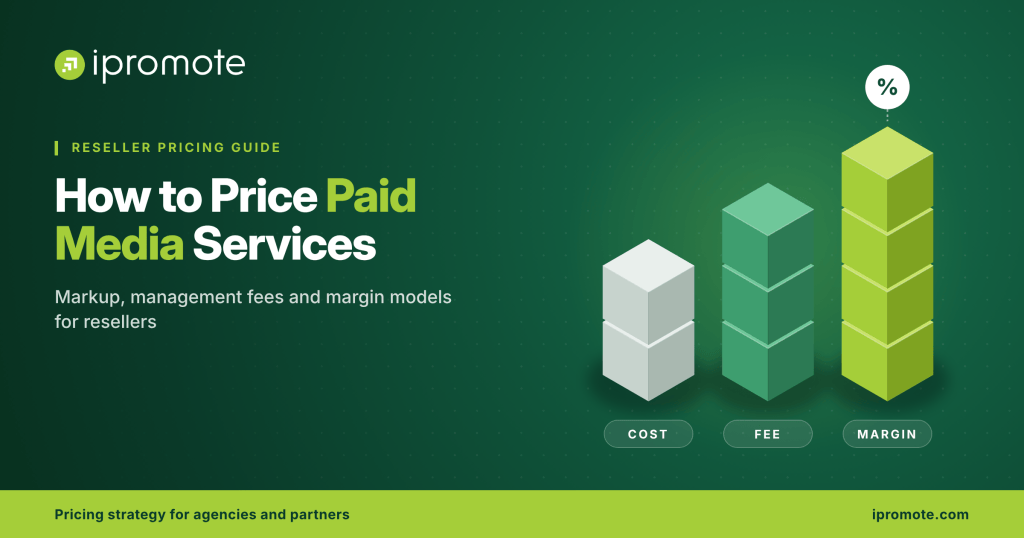
What is white-label ad fulfillment, and how do agencies price it for margin?

Your SMB clients want Google Ads, Meta campaigns and display ads that bring in customers. They don’t care who builds the campaigns. They care that the phone rings. White-label ad fulfillment fills the gap between what clients expect and what your team can staff.
For agencies, media companies and resellers, white-label ad fulfillment turns digital advertising into a product you can sell without hiring a full paid media department. The hard part is pricing it so every account adds profit instead of slowly draining it. This guide covers how the model works, the pricing structures agencies use and the math that protects your margin.
What white-label ad fulfillment actually means
White-label ad fulfillment is a partnership where a specialist provider runs ad campaigns for you, under your brand. You own the client relationship. The fulfillment partner handles setup, optimization and reporting behind the scenes.
Your client sees your logo on the proposal, your name on the reports and your team on the calls. The partner stays invisible.
A typical white label digital advertising arrangement includes:
- Campaign builds across search, social, display and video channels
- Audience targeting and keyword research
- Ongoing bid management and optimization
- Branded performance reports you send under your own name
- Platform access or dashboards for your account managers
It works like a store-brand product on a grocery shelf. A manufacturer makes it, the store puts its brand on it, and the store sets the retail price. You decide what to charge. The difference between your price and your fulfillment cost is your margin.
Why agencies choose white label over building in-house
An in-house paid media team sounds appealing until you add up the cost. A skilled PPC specialist needs a full salary plus benefits, software, training and management time. One specialist can only handle so many accounts before quality drops. When that person leaves, their knowledge often goes with them.
White-label fulfillment flips that cost structure. You pay per account or per campaign instead of carrying fixed payroll. Costs rise only when revenue rises. That variable model lets a small agency offer the same services as a much larger shop.
Speed improves too. A new client can launch in days rather than waiting on a hiring cycle. Sales teams can say yes to more channels, which increases deal size and makes accounts stickier. Clients who buy SEO, websites and ads from one provider rarely leave over a single bad month.
The bigger benefit is focus. Your team spends its time on the work that grows the business: selling, consulting and keeping clients happy.
The core pricing models for white-label ads
No single pricing model fits every agency. The right one depends on your client mix, average ad budget and how much service you add on top. Most agencies use some version of these four approaches.
Cost-plus markup
Cost-plus pricing starts with your wholesale fulfillment cost and adds a markup. Some agencies double their cost, while others apply a smaller or larger multiple depending on how much service they add.
This model is simple to explain internally and easy to scale. Its weakness is that it ties your price to your cost instead of to the value you deliver. A campaign that brings a local dentist thousands of dollars in new patients is worth far more than a simple markup reflects. Cost-plus pricing can leave that value on the table.
Percentage of ad spend
Many agencies charge a management fee based on a percentage of the client’s monthly media budget. Fees in the SMB space often land somewhere in the 15% to 30% range, though they vary a lot by market and service level. A client with a few thousand dollars in monthly spend can produce a healthy management fee under this model.
Revenue grows on its own as clients raise their budgets. The risk is on small accounts. A client spending only a few hundred dollars a month may not produce enough in fees to cover fulfillment and account management time. Smart agencies pair this model with a monthly minimum.
Flat monthly packages
Package pricing bundles media spend and management into tiers. An entry-level package might pair a modest ad budget with basic management. Higher tiers add spend, channels and more hands-on support.
SMB owners tend to like this approach because they know exactly what they’re paying. Your sales team benefits too, since packages shorten the sales cycle and cut down on custom quotes. Build the fulfillment cost and your profit target into every tier from the start to protect your margin.
Hybrid pricing
Hybrid models combine a base fee with a percentage or performance component. One option is a flat monthly platform fee plus a percentage of ad spend. Another is a one-time setup fee to cover onboarding, followed by a recurring management fee.
Hybrids protect you on small accounts and still reward growth on larger ones. They take a bit more explaining during the sale, so clear proposal templates matter.
How to calculate your margin
Pricing only works when you know your true cost per account. Many agencies stop at the fulfillment invoice and forget everything else that goes into serving the client. Build your calculation in layers.
Layer 1, fulfillment cost. This is what your white-label partner charges to run the campaign.
Layer 2, internal labor. Estimate the hours your account manager spends each month on calls, emails and report reviews. Multiply by a loaded hourly rate.
Layer 3, sales and overhead. Include commissions, CRM costs and a share of general overhead.
Layer 4, target profit. Decide what gross margin makes the account worth having.
Here’s how that plays out in a simplified, hypothetical example.
Picture a local HVAC company on a monthly package. Most of what they pay goes to media spend, and the rest is your management revenue. From that management revenue, you subtract your fulfillment cost, a few hours of account manager time and a share of commissions and overhead. What’s left is your profit.
In a scenario like this, it’s easy to end up with a margin in the 20% to 30% range on management revenue without realizing it. Whether that’s enough depends on your goals. If you want to push toward 40% or higher, you have three options. Raise the package price, cut internal hours with automated reporting, or move more clients into higher tiers. Running these numbers with your own costs before you set prices is far better than finding thin margins six months later.
One more tip: calculate margin on management revenue, not total client billing. Media spend passes straight through to the ad platforms. Including it in your margin math makes thin accounts look healthier than they are.
Pricing mistakes that quietly kill margin
Even agencies with solid pricing models run into trouble. These mistakes come up again and again.
Pricing below the minimum viable account. Every account takes a fixed amount of service time. Below a certain budget, you lose money no matter what percentage you charge. Set a floor and stick to it.
Ignoring onboarding costs. The first month of a campaign takes more work than month six. A one-time setup fee covers that early effort and filters out clients who aren’t serious.
Discounting to close. Even a modest discount on management fees can take a big bite out of your profit on an account. Add value first, like an extra channel or a strategy session, before you cut price.
Underpricing reporting. Clients judge you by the reports they get. Branded, easy-to-read reporting supports premium pricing, so treat it as part of the product.
Failing to revisit prices. Ad platform costs, fulfillment fees and client expectations all change. Review your pricing at least once a year.
How to package white-label ads so SMBs say yes
Small business owners rarely buy “impressions” or “click-through rates.” They buy phone calls, booked appointments and foot traffic. Your packages should use that language.
Name tiers after outcomes and business stages. “Local Launch,” “Steady Growth” and “Market Leader” tell a story that “Bronze, Silver, Gold” never will. Start each tier with what the client gets in plain terms, then list the channels underneath.
Bundling helps too. Pairing search ads with social retargeting or a landing page creates a package that’s hard to compare against a freelancer’s quote. When clients can’t compare prices line by line, you compete on value instead of cost.
Set expectations early. Explain the ramp-up period for new campaigns and agree on the metrics you’ll report. Clear expectations reduce churn, and lower churn does more for long-term margin than almost any price increase.
Where iPromote fits for agencies
iPromote built its platform for partners who want to sell digital advertising to small businesses without building a media team from scratch. Agencies, media companies and resellers use iPromote to run search, social, display and other campaigns under their own brand. iPromote handles fulfillment. Partners keep the client relationship and set their own prices.
That setup works with every pricing model above. You know your fulfillment cost going in, which makes margin planning predictable. Branded reporting keeps your name in front of the client. Your team spends its time selling and planning strategy instead of managing bids.
If your agency wants to add a high-demand service or replace an unreliable vendor, white label digital advertising through a proven platform is the faster route to profitable accounts.
Turn ad fulfillment into a profit center
White-label ad fulfillment lets agencies sell what SMB clients want most without the cost and risk of an in-house team. Profit comes down to pricing discipline. Know your full cost per account, choose a model that fits your client mix, and protect your margin with minimums, setup fees and outcome-focused packages.
Want to see how it works for your agency? Visit ipromote.com to learn how iPromote helps partners deliver results for their small business clients and earn healthier margins on every account.